Kiup, E., Webb. M.J., Placzek, C.J. & Nelson, P.N.
Research recently published in the PNG Coffee Journal has examined the movement of nutrients into and out of food gardens in the Papua New Guinea highlands. A substantial portion of exported nutrients are in ‘wastes’ (i.e. plant parts harvested and removed from the garden plot but not consumed). The study showed that with current practices, soils are likely to become deficient in N, P and K. Better use of nutrient sources such as coffee pulp, kitchen peelings and crop residues could help to meet crop needs for N and K, as an application of those materials to soil will likely increase soil N and K concentrations. This will require education about the value of nutrients in waste products.
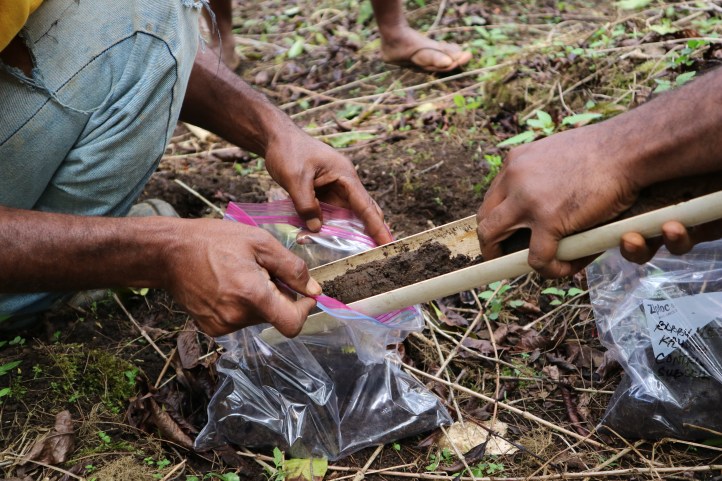
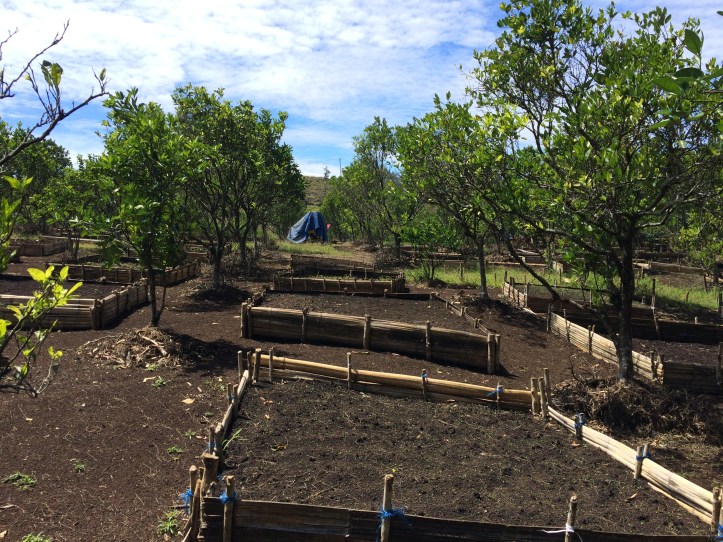
To capture the nutrient dynamics in a smallholder farming system, soil samples were collected from six farmer food gardens in Bena, Eastern Highlands Province, PNG. The selected households were participants from previous research from the Australian Centre for International Agricultural Research (ACIAR) project ASEM/2008/036: ‘Improving livelihoods of smallholder families through increased coffee-based farming systems’.
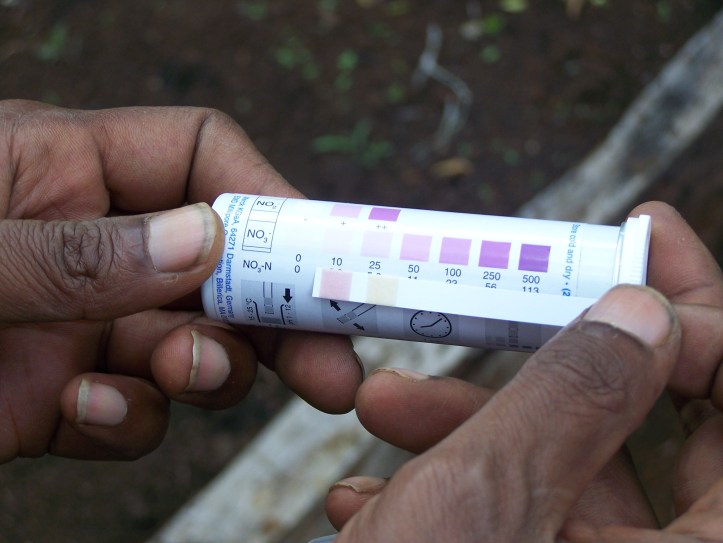
Crops were sampled at maturity, separated into various parts, dried and ground and analysed for macronutrients and micronutrients. Soil samples were analysed for total C and N, Colwell P, and silver thiourea exchangeable K, Ca and Mg concentrations and cation exchange capacity, pH (water and calcium chloride) and electrical conductivity. The two main nutrient fluxes were the output in harvested crop and input in inorganic fertilizers. The amounts of N and K exported in harvested crops exceeded the amounts imported in inorganic fertilizers, resulting in a negative balance of those nutrients.
The increase in commercial food production to supply urban markets has led to increased export of nutrients from gardens in crops. Crop harvesting and preparation produces residues or wastes that might be better managed to retain nutrients in the gardens. Some farmers do not apply the waste back to their gardens because they believe it makes their gardens look untidy, while others do not apply it as the waste provides a breeding ground for pests and diseases. However, the value of the nutrients in the waste should be considered for future soil fertility management.
This research and the development of this research paper emerged under ACIAR-funded projects ASEM/2008/036 and ASEM/2016/100. This and other recent PNG Coffee Journal papers can be found here.
Full reference:
Kiup, E., Webb. M.J., Placzek, C.J. & Nelson, P.N. (2021). Managing nutrient stocks and movement in smallholder gardens in Bena, Papua New Guinea. PNG Coffee Journal 15(1), 30-38.
 Pacific Livelihoods