In this series we put a number of questions to our past students about their research projects.
Alois Ndrewou is the Director of the Centre for Natural Resources Research & Development, University of Goroka, Papua New Guinea. His recently completed PhD thesis at Curtin University is titled The impact of Cocoa Pod Borer on the livelihood responses of farmers in East Sepik Province, Papua New Guinea. His research was supported by an Australia Awards Scholarship.
1) WHAT WAS THE THESIS ABOUT?
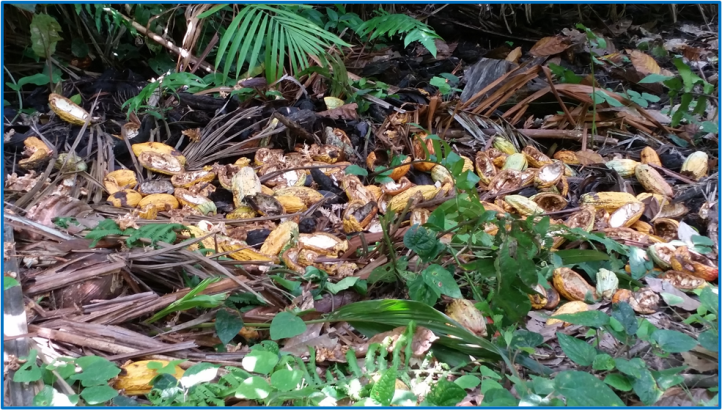
The study examined the livelihood responses of migrant and landowner smallholder cocoa farmers to the arrival of a serious cocoa pest – cocoa pod borer (CPB). When CPB arrived in the East Sepik, Papua New Guinea (PNG) around 2008, cocoa was the key income source for both groups. The intrusion of CPB saw a drastic decline in cocoa income. In response, smallholder farming families had to adapt their livelihoods to ensure income and food security, and develop strategies to meet school fees, hospital expenses, transport costs and social obligations such as bride price, compensation payments, and family gatherings.
I used a mixed methods approach in which data was obtained from a variety of sources including surveys and interviews with farmers and field assessments. I spent one year in the field with the migrants and landowners of Dagua, East Sepik Province, PNG. By living with the people it was possible to engage deeply with farmers to understand the basis of their livelihood responses to the impact of CPB.
2) WHAT WERE THE MAIN FINDINGS OF YOUR THESIS?
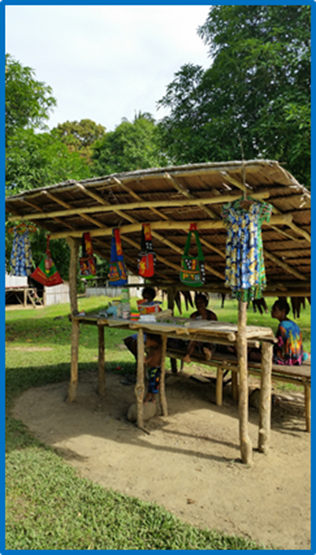
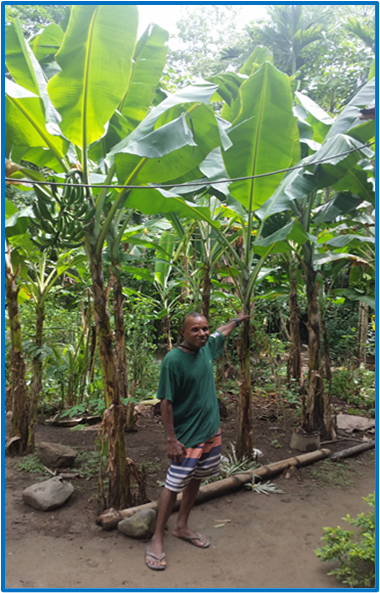
Findings show that migrants and landowners differed substantially in their responses to livelihood shocks and stresses. The key determinant was land access. The decisions each group made very much depended on their context, and the resources they had available to them. Migrants, with limited access to land were pressured to adopt strategies to cultivate more intensively, though still using limited external inputs. Migrants also pursued livelihood activities that were not dependent on land, including roadside sale of ‘store goods’. Migrants also sought to maintain and cultivate positive relationships with landowners so as to maintain land security.
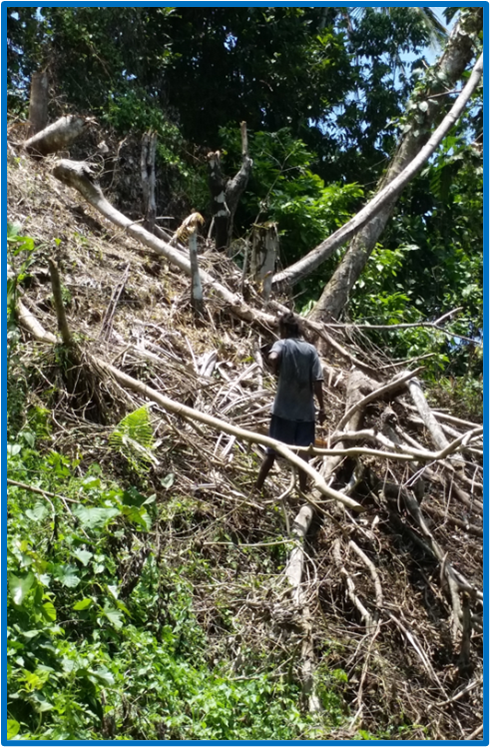
Landowners, in contrast, were not under immediate pressure to adopt strategies to maintain cash income. This was because they had access to many other land-based resources to earn cash and to produce food for home consumption. Instead of intensifying their land use, as migrants had done, landowners adopted an extensification approach where more land was brought into cultivation.
Previous research has examined the livelihood strategies of smallholder cocoa farmers in PNG, and how they have been impacted by, and adapted their livelihoods in response to, CPB. See here, here and here. Through a case study of the Dagua area, my research has developed an understanding of how this shock has impacted landowner and migrant communities in different ways, and their different responses to the shock.
3) WHY IS YOUR RESEARCH IMPORTANT
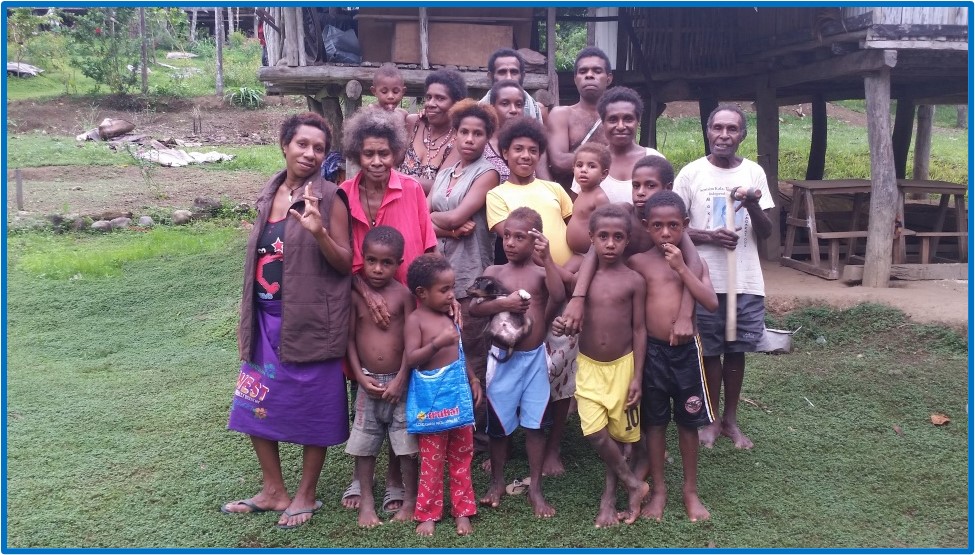
This study highlights some of the challenges faced by migrant communities in PNG. Many of these migrants do not have legal access to land but have built homes and raised families. These migrants contribute to the national economy through farming or employment. However, their settlement remains uncertain. It is important that responsible state agencies consider these groups of people in development plans. The study also points out that even though landowners have better access to resources than migrants, in the future population pressure may cause them to rethink how their land is utilized. Bringing more land into cultivation has undesirable consequences such as deforestation, soil degradation and loss of biodiversity. Unpredictable weather under climate change is also likely to exacerbate the challenges.
Generally, this research highlights people’s resilience and adaptation during periods of shock and stress. By understanding the livelihood options people have, and the decisions they make, it is possible to develop appropriate policies to ensure people are prepared to counter the impacts of shocks and stress.
4) ARE THERE POLICY IMPLICATIONS OF YOUR RESEARCH? IF SO, WHAT ARE THEY?
This research highlights several possible policy interventions. First, peoples’ coping and adaptation strategies are derived from resources accessible to them. However, essential services such as hospitals, schools, transport, banking and markets, and vital infrastructure such as quality roads, bridges, and telecommunication are important in aiding people to cope and adapt to shocks and stresses. The challenges people of Dagua face in accessing government services are similar to other rural areas of PNG. Without government services people will continue to be marginalized and are not able to fully contribute to the growth and development of the country.
Second, literacy is an important aspect of responding to shocks and stress. Low education and illiteracy continue to be a challenge for rural Papua New Guineans which limits their resilience to shocks. The state has to develop literacy programs that will help rural villagers. Third, informal settlement issues have become a problem in PNG where many people are living on land that does not belong to them. The rural-urban drift has seen many people from the rural areas moving into towns and cities with expectations of a better life. Often these expectations are not met and people find refuge in existing informal settlements. The recent eviction of settlers in Lae and Port Moresby are examples of settlement issues that have been ignored by successive governments. If unattended, challenges of bigger magnitude may arise.

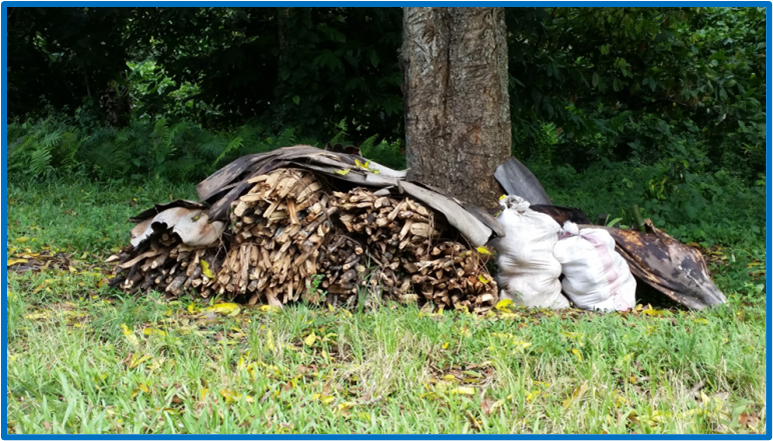
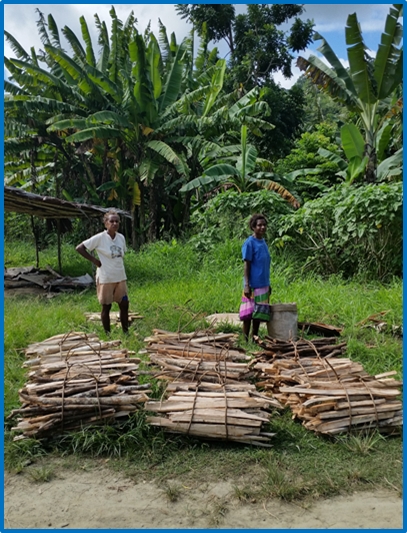
Fourth, women were active during the CPB period. Women engaged in food production and collected wild vegetables from the forest. Moreover, most women, especially from the migrant group, sold food and store items at roadside markets to earn cash. Women from the landowner group collected firewood from the forest, and helped their husband cultivate new lands for farming. This highlights the important role of women as active participants in the coping and adaptation practices during livelihood crises. Policies directed at empowering rural women to be decision-makers are crucial.
I had the opportunity to work with some data from an ACIAR Project (HORT/2014/096) ‘Enterprise-driven transformation of family cocoa production in East Sepik, Madang, New Ireland and Chimbu Provinces of Papua New Guinea’.
The PNG Cocoa Coconut Research Institute (PNGCCRI) also provided support in this study. Information obtained was from Jimmy Risimeri, Esley Peter and Joachim Lummani, who were staff of the institute.
Reference
Ndrewou, A. (2023). The impact of Cocoa Pod Borer on the livelihood responses of farmers in East Sepik Province, Papua New Guinea. Doctoral Thesis. Curtin University.
 Pacific Livelihoods