In many Pacific communities, such as in Papua New Guinea, three interlinked forces are reshaping how people live and work: land, labour, and mobility. These are not just academic topics. They are the lived realities of families, villages and generations navigating change.
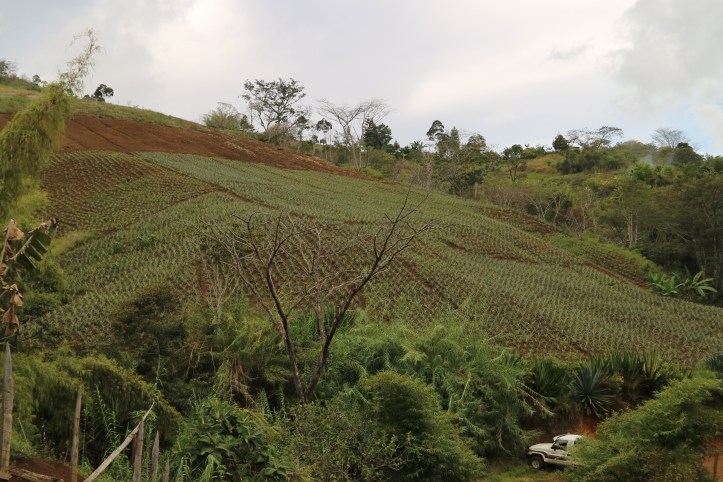
Land: More Than Just Soil
In semi-subsistence societies across the Pacific, land holds deep cultural, social, and spiritual meaning. It anchors people’s identities, rituals, and social organisation. But as globalisation and market demands grow, land is being commodified. Export cash crops and urban markets are eroding traditional values. In some places, community-held land is now being sold to ‘outsiders’, placing land-poor households, especially women, at risk. Our research focuses on these dynamics, probing how customary land tenure is transforming, and who is most vulnerable in the process.
Labour: From Reciprocity to Markets
The meaning of labour in Pacific societies is also shifting. What was once rooted in kinship, communal values, reciprocity and generational ties is increasingly framed in market terms: paid work, entrepreneurship, and mobility. Younger generations are adapting to this shift. They are seeking new opportunities, earning outside traditional systems, and reimagining what ‘work’ means. Our aim is to understand these transitions and identify strategies to improve livelihood security, particularly for those with fewer resources.
Mobility: Searching for Opportunity
Migration is no longer just a rural-to-urban story. People are increasingly moving from remote regions to agricultural frontiers, resource zones and other rural areas — places that promise more opportunities. These moves can bring social and economic benefits to both those leaving and those receiving migrants, but they also generate tensions around land access and employment. Our research uses participatory approaches to explore how migration reshapes communities, and how to support both migrants and landowners in ways that are fair, sustainable and locally grounded.
Why This Matters
- Development Relevance: Understanding these changes helps design policies and programs that truly strengthen livelihoods, whether that is land reform, labour mobility programs or community development projects
- Social Impact: By focusing on the most vulnerable such as land-poor households, women and youth, we highlight who benefits and who loses in these transformations
- Applied Research: Our work is not just theoretical. We engage communities directly, co-developing strategies to safeguard well-being and strengthen social cohesion.
Further Reading
Nake S., Curry G.N., Koczberski G., Germis E., Bue V., Tilden G.M., Koia M., Pileng L., Ryan S. (2025). Social, technical and institutional innovation: oil palm smallholders’ responses to rising land and income pressures in Papua New Guinea. Cahiers Agricultures 34: 24. https://doi.org/10.1051/cagri/2025025.
Koczberski, G., Numbasa, G., Germis, E., and Curry, G. N. (2017). Informal land markets in Papua New Guinea. In: McDonnell, S., Allen, M., and Filer, C. (eds) Kastom, Property and Ideology: Land Transformations in Melanesia. Canberra: ANU Press, pp 145–168.
Koczberski, G., Curry, G. N., and Anjen, J. (2015). Changing land tenure and informal land markets in the oil palm frontier regions of Papua New Guinea: The challenge for land reform. In: Curry, G., Koczberski, G., and Connell, J. (eds) Migration, Land and Livelihoods: Creating Alternative Modernities in the Pacific. London: Routledge, pp 67-82.
Koczberski, G., and Curry, G. N. (2004). Divided communities and contested landscapes: Mobility, development and shifting identities in migrant destination sites in Papua New Guinea. Asia Pacific Viewpoint 45(3), pp 357-371.
 Pacific Livelihoods